

Separation anxiety is one of the most heartbreaking things a dog owner can witness — and one of the most common reasons pet parents reach out to us at Ohh My Dog!. The good news: it is highly treatable with the right approach. As a Fear Free certified pet care professional, I want to walk you through what separation anxiety actually is, why it develops, and the evidence-based strategies that genuinely work.
🐾 Key Takeaways: Fear Free Strategies for Separation Anxiety
- Separation anxiety is a panic response — not defiance. Your dog is not acting out; their brain is in fight-or-flight.
- Learn the FAS Scale — knowing your dog's stress level (FAS 0–5) lets you intervene before panic sets in.
- Desensitize departure cues — practice picking up keys, putting on shoes, and grabbing your bag without actually leaving.
- Train sub-threshold — start with absences of just 1–5 seconds and build up very gradually. Never push past the point of distress.
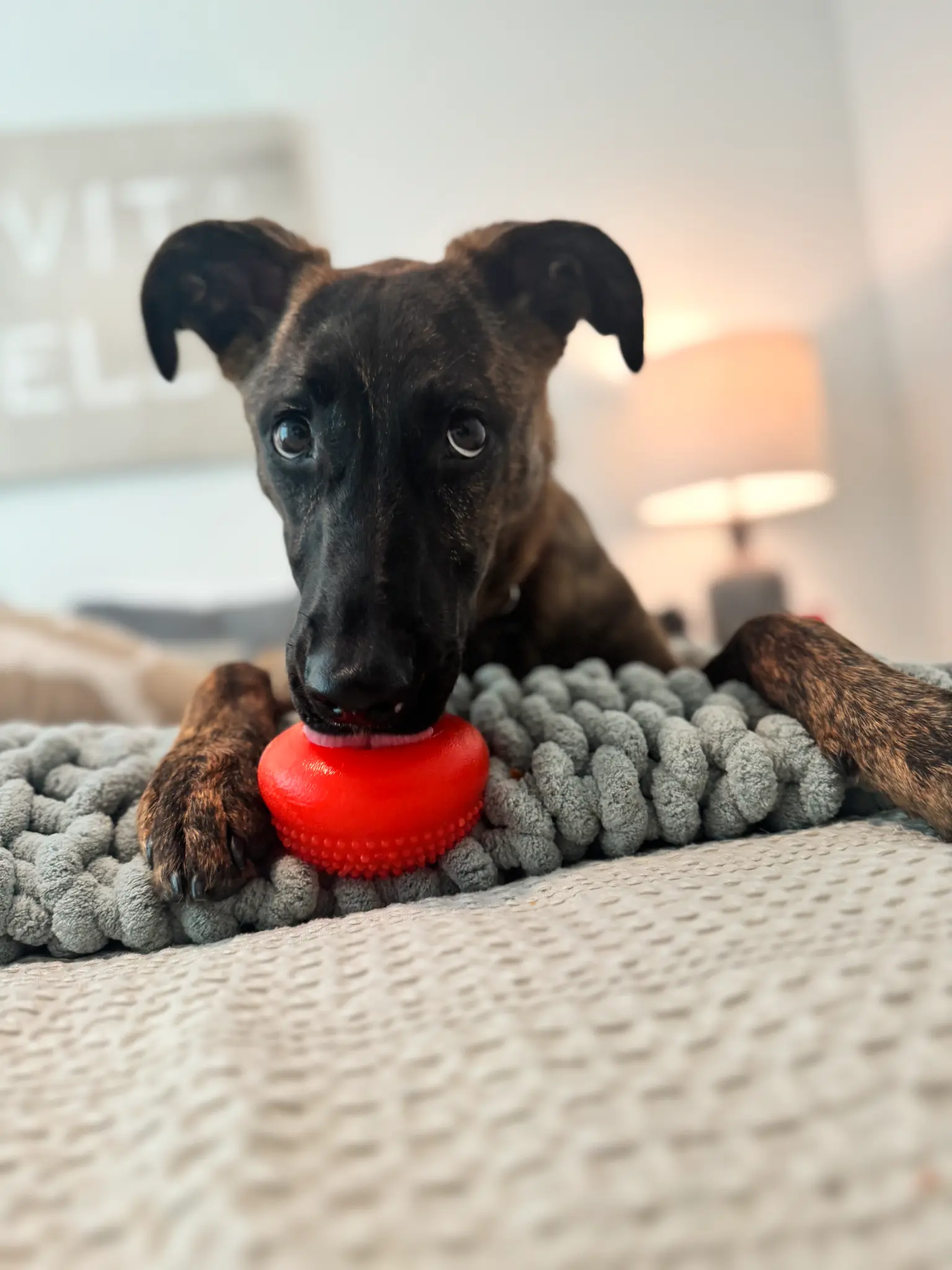
- Create a positive "alone" association — pair your departure with a frozen Kong or lick mat your dog only gets when you leave.
- Never punish anxiety behaviors — punishment adds fear on top of fear and makes separation anxiety significantly worse.
- Use calming aids — Adaptil diffusers, calming music, and anxiety wraps can lower the baseline stress level during training.
- Prevent full panic episodes — every panic episode reinforces the neural pathway. A professional pet sitter can keep your dog sub-threshold while you are away.
- Consider a CSAT — for severe cases, a Certified Separation Anxiety Trainer (trained under Malena DeMartini's protocol) is the gold standard.
- Progress takes time — most dogs reach functional independence within 4–6 months of consistent, compassionate training.
Watch: What is separation anxiety in dogs and how does it develop?
What Is Separation Anxiety — Really?
Separation anxiety is a panic response, not a behavior problem. When a dog with separation anxiety is left alone, their brain enters a genuine fight-or-flight state — flooding the body with cortisol and adrenaline. The destructive chewing, howling, house soiling, and escape attempts you see are not defiance or spite. They are the outward expression of a dog in distress.
It is important to distinguish true separation anxiety from isolation distress (which improves when any person — not just the owner — is present) and boredom behaviors (which occur regardless of whether the owner is home). True separation anxiety is specifically triggered by the absence of an attachment figure.
Why Does Separation Anxiety Develop?
Several factors contribute to the development of separation anxiety:
- Pandemic puppies: Dogs adopted during COVID-19 who were never taught to be alone during their critical socialization window
- Rescue history: Dogs who experienced abandonment, shelter stress, or multiple rehomings
- Genetics: Some breeds (Vizslas, Labrador Retrievers, Border Collies) are predisposed to hyper-attachment
- Reinforced departure anxiety: Owners who make dramatic goodbyes or returns inadvertently teach the dog that departures are emotionally significant events
- Sudden schedule changes: A return to the office after working from home is one of the most common triggers
Fear Free Approach: The Core Principles
The Fear Free certification program — which I hold as a professional — is built on reducing fear, anxiety, and stress (FAS) in animals using science-based, compassionate methods. Applied to separation anxiety, these principles translate into a specific framework:
"The goal is not to teach the dog to tolerate being alone. The goal is to teach the dog to feel safe being alone."
There is a critical difference. Tolerance is suppression. Safety is genuine emotional regulation.
Know Your Dog's Stress Level: The FAS Scale
Before you can help your dog, you need to be able to read your dog. Fear Free professionals use the FAS (Fear, Anxiety, and Stress) Scale — a research-backed tool that helps pet parents identify exactly how stressed their dog is in any given moment, from fully relaxed to full panic.
Learning to use the FAS scale is one of the most empowering things you can do as a dog owner. It allows you to intervene early — before your dog reaches a point of no return — and make real-time decisions that protect their emotional wellbeing.
Official Fear Free FAS Spectrum Chart — fearfreehappyhomes.com
How to Use the FAS Scale at Home
Here is a quick guide to each level and what to do when you see it:
| FAS Level | What You See | What to Do |
|---|---|---|
| FAS 0 — Relaxed | Sleeping, soft eyes, loose body, relaxed mouth, slow tail wag, friendly greeting | This is your goal state. Note what conditions produced it — routine, environment, enrichment. |
| FAS 0–1 — Perked/Interested | Tail slightly up, ears forward, mouth slightly open, mild pupil dilation, curious but not tense | Normal alert state. Monitor — if arousal increases, redirect with a calm activity. |
| FAS 0–1 — Alert/Anxious | Tail up higher, intense gaze, closed mouth, brow tense, hair slightly raised, highly aroused | Early warning sign. Remove the trigger if possible. Use a calm voice, lick mat, or sniff activity to bring arousal down. |
| FAS 1 — Mild/Subtle | Lip licking, avoids eye contact, turns head away, lifts paw, slight panting, relaxed lip corners | Your dog is communicating discomfort. Honor it — give space, remove pressure, do not force interaction. |
| FAS 2 — Moderate | Ears back or to the side, tail down, furrowed brow, slow movements, fidgeting, panting, attention-seeking | Increase distance from the stressor. End training sessions. Offer a safe space and calming enrichment. |
| FAS 3 — Moderate | Turning head away, refusing treats or taking them roughly, hesitant to interact | Stop all training. Remove from the situation. Allow the dog to decompress in a quiet, safe space for at least 20–30 minutes. |
| FAS 4 — Severe (Flight/Freeze/Fret) | Ears back, tail tucked, actively trying to escape, mouth closed or excessive panting, whites of eyes showing, trembling, body hunched | This is a crisis state. Remove immediately. Do not attempt training. Contact your vet or a Fear Free professional. |
| FAS 5 — Severe (Fight/Aggression) | Lunging, growling, snapping, offensive or defensive aggression, pupils dilated, all teeth showing | Safety first — for you and your dog. Do not punish. Consult a veterinary behaviorist immediately. |
FAS and Separation Anxiety: What to Watch For
Dogs with separation anxiety typically escalate from FAS 0–1 to FAS 3–4 within minutes of being left alone. The goal of separation anxiety training is to keep your dog at FAS 0–1 during absences — which is why sub-threshold training (very short departures) is so critical. You are literally preventing the brain from entering the panic state.
If you set up a camera and watch your dog during absences, use the FAS scale to assess what you see. If your dog reaches FAS 3 or above within the first few minutes, that is your starting threshold — and your training must begin well below it.
Fear Free Tips to Reduce Separation Anxiety
1. Desensitize Your Departure Cues
Dogs with separation anxiety often begin to panic before you leave — when they see you pick up your keys, put on your shoes, or grab your bag. These are called pre-departure cues, and they trigger the anxiety spiral early.
What to do: Practice picking up your keys 20 times a day without leaving. Put on your shoes and sit back down. Grab your bag and watch TV. Over time, these cues lose their predictive power and stop triggering the panic response.
2. Build Alone Time Gradually (Sub-Threshold Training)
The most evidence-based treatment for separation anxiety is systematic desensitization — exposing the dog to absences so short they do not trigger anxiety, then very gradually increasing duration. This is called staying "sub-threshold."
What to do: Start with absences of 1–5 seconds. Return before any anxiety begins. Gradually build to 10 seconds, 30 seconds, 1 minute — over days or weeks, not hours. The key rule: never push past the point where the dog shows distress.
3. Create a Positive "Alone" Association
Use a departure cue — a specific word, phrase, or action — that predicts good things. Pair your departure with a high-value food puzzle (frozen Kong, lick mat, snuffle mat) that the dog only gets when you leave. Over time, your departure becomes a predictor of good things rather than a trigger for panic.
4. Avoid Punishment — Always
Punishing a dog for separation anxiety behaviors (destruction, soiling, barking) makes the anxiety worse, not better. The dog is already in a panic state. Adding punishment adds fear on top of fear. From a Fear Free perspective, punishment is never appropriate for anxiety-based behaviors.
5. Use Calming Aids Strategically
Several evidence-supported tools can reduce baseline anxiety during training:
- Adaptil (DAP) diffusers: Synthetic dog-appeasing pheromone that mimics the calming signal nursing mothers produce
- Calming music or auditory enrichment: Classical music, reggae, and nature soundscapes have been shown to reduce cortisol in dogs (see our post on vibrotactile therapy and auditory enrichment)
- Anxiety wraps (ThunderShirt): Deep pressure stimulation that activates the parasympathetic nervous system
- Veterinary consultation: For moderate-to-severe cases, short-term anti-anxiety medication (like trazodone or fluoxetine) can lower the anxiety baseline enough for behavioral training to take hold
6. Hire a Professional Pet Sitter During Training
One of the most practical steps you can take is to prevent full-blown panic episodes while you are working on the training protocol. Every time your dog reaches full panic, it reinforces the neural pathway. A professional pet sitter or dog walker who visits during your absence keeps the dog sub-threshold and prevents setbacks.
At Ohh My Dog!, our drop-in visits and in-home pet sitting services are specifically designed to provide the human presence that anxious dogs need — reducing the duration of alone time while you work on the long-term behavioral protocol.
7. Consider a Certified Separation Anxiety Trainer (CSAT)
For severe cases, a Certified Separation Anxiety Trainer (CSAT) — trained under Malena DeMartini's protocol — can design a customized desensitization plan and coach you through it remotely via video. This is the gold standard for treatment and has a high success rate when followed consistently.
What Does Progress Look Like?
| Timeframe | Realistic Expectation |
|---|---|
| Week 1–2 | Dog tolerates 1–5 minute absences without panic; pre-departure cues lose some emotional charge |
| Week 3–4 | Dog settles within 2–3 minutes of departure; food puzzles are engaged with during absences |
| Month 2–3 | Dog tolerates 30–60 minute absences; baseline anxiety is visibly lower |
| Month 4–6 | Most dogs reach functional independence for a full workday with consistent training |
Official Certification
Fear Free® Certified Professional
Caroline has completed the Fear Free Pet Sitter Certification Course — training professionals to prevent and alleviate fear, anxiety, and stress in every animal they care for.
View all credentials →How Ohh My Dog! Supports Anxious Dogs
Every member of our team is trained in Fear Free principles. When we care for an anxious dog, we:
- Follow the owner's established routine and departure protocol exactly
- Use calming music, lick mats, and enrichment activities to keep the dog sub-threshold
- Avoid any interactions that could increase arousal or anxiety
- Provide detailed updates and photos so owners have peace of mind
- Communicate proactively if we observe signs of distress
If your dog struggles with separation anxiety and you need professional support during your absences, we are here to help. Request a free service consultation or call us at (925) 446-9754.
Recommended Resource for Pet Parents
The team at Fear Free Happy Homes has created an excellent free video for pet parents: "Preventing and Alleviating Anxieties 101." It introduces the most common anxieties and phobias pets experience, explains their origins, addresses symptoms, and suggests solutions — in plain language designed for dog owners, not professionals.
We recommend every pet parent watch it, especially if your dog shows any signs on the FAS scale above FAS 1.
"Preventing and Alleviating Anxieties 101" — Fear Free Happy Homes
Fear Free Happy Homes is a free educational platform created by Fear Free, LLC — the same organization behind the professional certification held by Ohh My Dog!. Their content library includes hundreds of articles and videos on pet behavior, health, and wellbeing.


